Mark Knight: Built For The Dancefloor

Updated: Jul 24
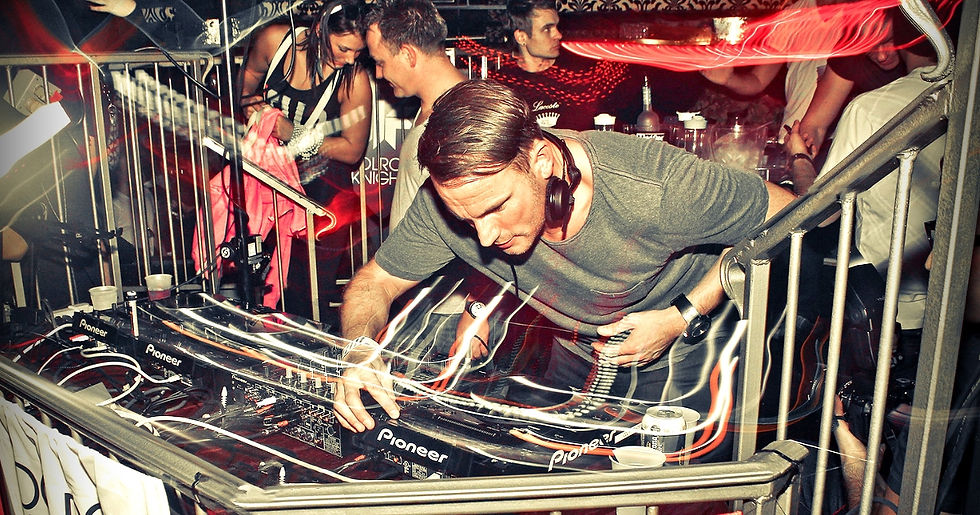
Mark Knight by Shawn Tron, CC BY- 2..0
The man who shaped a movement — and is still shaping it
Some DJs follow trends, and some DJs quietly outlast them. Mark Knight belongs firmly in the second category — not because he avoided the spotlight, but because he never needed to chase it.
For over two decades, he's been operating at the intersection of credibility and consistency, building a career that doesn't spike — it sustains. In a scene obsessed with the next big thing, Knight has made a habit of being the constant.
Born in Maidstone, Kent in 1973, his rise wasn't engineered through hype cycles or viral moments. It came the long way — through records that worked, sets that connected, and instincts that rarely missed. By the early 2000s, he wasn't just part of the house music conversation. He was shaping it.
The Label
The defining moment came in 2003 with the launch of Toolroom Records.
What started as a personal outlet quietly evolved into one of the UK's most influential house and tech house imprints. Toolroom didn't just release tracks — it set a standard. Artists like David Guetta, Deadmau5, and Jaguar Skills passed through its ecosystem. That kind of roster doesn't happen by accident. It happens because you know what good music sounds like, and you're willing to bet on it.
Over time, Toolroom became less a label and more a proving ground — a place where a certain level of groove, clarity, and dancefloor functionality was simply expected. Knight built that culture from scratch, and it still holds.
The Sound
His production style isn't about excess. It's about precision. Tight drums, rolling basslines, hooks that land without trying too hard — music designed for movement, not distraction.
Elsewhere, cuts like We Get High From The Music with Mr. V tap into something more fundamental — less about charts, more about feeling. That connection to house music's roots has always been central to his identity, even as his reach expanded into global territory.
The Reach
And it has expanded considerably. Knight's studio work stretches far beyond the underground — he has written and produced for Calvin Harris, the Black Eyed Peas, David Guetta, Dido, Jennifer Lopez, and Flo Rida. His contribution to the Black Eyed Peas' album The E.N.D. earned a Grammy nomination. Alongside Funkagenda, he took the Track of the Season award at the 2008 DJ Awards for Man with the Red Face.
Few artists manage that balance — between club credibility and global pop — without losing their core identity. Knight never really has.
The Road
But it's on the road where his reputation is fully cemented.
He's not a DJ who coasts through sets. He reads rooms, adjusts pace, and builds energy with intent. Whether it's a packed festival stage or a late-night club, every set feels like it's being shaped in real time — not played back. That adaptability is what separates technicians from lifers.
Toolroom Radio has only amplified that reach. Broadcasting to over 15 million listeners across 60 countries every week, it's become less of a show and more of a global touchpoint — a reflection of Knight's taste, and of the wider scene he continues to support.
Right Now
Recent collaborations with Armand Van Helden, Green Velvet, James Hurr, and Darius Syrossian show an artist who refuses to sit still. His album Untold Business landed in 2021, and the singles have kept coming — each one a little different, but all unmistakably him. There's a thread running through everything: a commitment to the dancefloor that never wavers.
Because for all the accolades — the streams, the awards, the longevity — what stands out is the mindset. Knight still operates like someone invested in the culture, not just benefiting from it. He champions new artists, collaborates across generations, and continues to release with the same intent that defined his early years.
No reinvention for the sake of relevance. Just evolution grounded in experience.
Some artists define moments. Others build frameworks that last well beyond them.
Mark Knight did both — and he's still doing it.
👇 Follow Mark Knight


Comments